Understanding the nuances between a live setup wizard and a standalone installer represents the foundational step in configuring an internet browser on modern hardware. PC users operating the latest desktop environment possess multiple avenues to initiate the setup, each catering to specific deployment scenarios.
The standard approach involves acquiring the cloud-assisted utility directly from the developer’s main hub, a strategy heavily favored because the delivery network analyzes system architecture in real-time. This mechanism guarantees that the binary matches underlying hardware capabilities, eliminating potential runtime conflicts or architectural mismatches from the outset.
Fetching the Cloud Installer
- Launch the native web browser that comes pre-configured with the operating system setup to begin navigating the web.
- Enter core search terms regarding the alternative browser choice into a preferred discovery engine to bypass promotional results.
- Locate the authenticated platform repository from the structured results to access the primary deployment interface.
- Trigger the action command positioned prominently within the central dashboard of the portal.
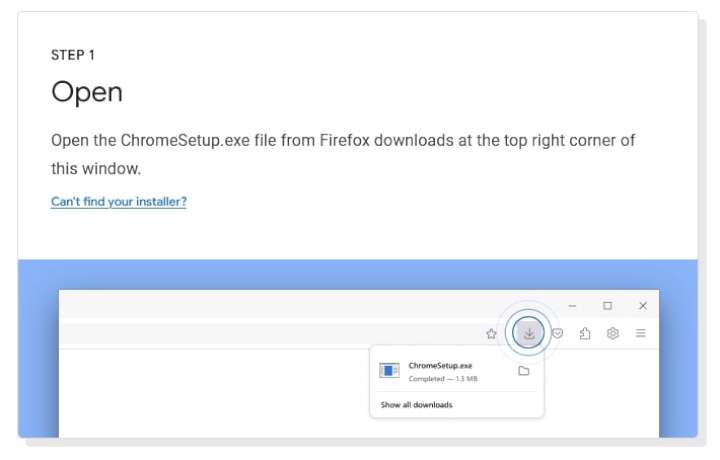
- Run the localized minimal executable package, which serves exclusively to stream the latest stable assets silently in the background.
Securing the Standalone Package
- Navigate directly to the dedicated distribution node optimized for offline deployment architectures.
- Select the comprehensive payload archive which consolidates every visual and operational resource into a single distribution file.
- Adjust the regional configuration matrix located within the footer interface if the operating environment requires localized linguistic resources.
- Transfer the downloaded bundle to external storage media to deploy the software across isolated workstations lacking active network infrastructure.
Executing via the Native Marketplace
- Open the integrated application storefront built directly into the desktop environment dashboard.
- Utilize the global search utility to locate the official product entry within the digital storefront catalog.
- Engage with the direct provisioning system to automatically handle the extraction and integration phases without generating a separate user-managed package.
- Keep the network interface active throughout this process since the marketplace relies on constant telemetry to complete the synchronization.
| Category | 2025 Projected Details |
|---|---|
| Download Data | |
| File Size | Online Installer: ~1.5 MB / Offline Installer: ~120 MB (Windows) |
| Supported OS | Windows 11/10 (64-bit only), macOS 14+, Linux (Ubuntu 24.04+), Android 14+, iOS 18+ |
| Installer Types | Online (AI-optimized installer), Offline, Microsoft Store, Enterprise Deployment Packages |
| Release Date | July 2025 (Stable Channel) |
| SHA-256 Checksum | Windows Offline: 5a3d...e9b2macOS: 8c1f...d7a4 (example hashes) |
| Feature Data | |
| Performance | 25% faster page loads vs. 2024 builds AI-driven memory optimization (~30% less RAM use) |
| Security | Quantum Encryption Protocol AI-Powered Threat Detection Zero-Day Exploit Shield |
| New Features | 3D Spatial Browsing (AR/VR support) Neural Voice Search AI Tab Manager |
| Compatibility | Native Windows 11 24H2 integration AV2 codec support WebXR 2.0 standards |
| Privacy Tools | Incognito++ Mode (IP masking) Decentralized ID Support (Blockchain-based logins) |
| Sync Capabilities | Cross-platform AR/VR device sync AI-Powered Workspace Suggestions |