
In the realm of Windows disk defragmentation utilities, Auslogics Disk Defrag is a standout option that not only excels at disk repair but also at disk optimization. Power users are aware of the fact that even though Microsoft provides some default utilities that run weekly, its built-in tools are not always the best ones. That’s why the company offers to the rescue by providing a more profound and comprehensive defragmentation, which helps to keep the Windows operating system in good shape.
In case you decide to get a defragmentation tool, which is of high quality, you should go for Auslogics. Their official website is the place from where you can obtain the installation file by simply clicking on the “Free Download” button.
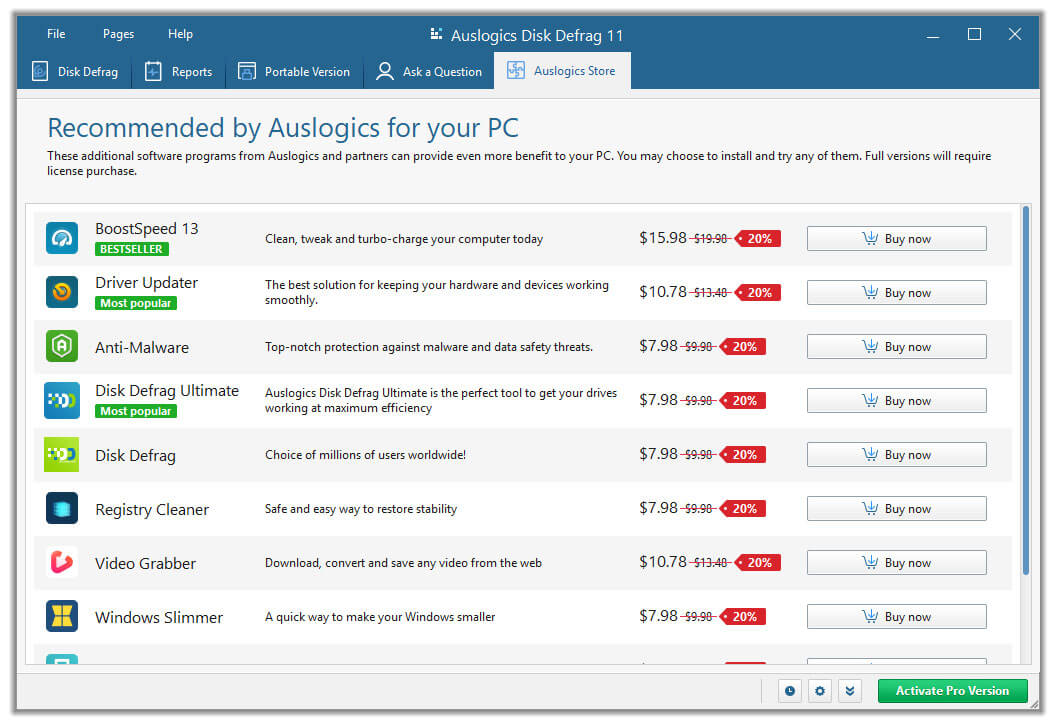
My Personal Take. If we speak about disk quality, then certainly this software is a brilliant idea, but I am quite sure it doesn’t have to be active all the time. My style of work is very straightforward. Once a year, I install the program, carry out a deep defrag and then uninstall it. I am not in a position to convince that it should be kept in an idle state on my computer. While the developer creates other nice software, the heavy cross-promotion (seeing ads of other apps inside the one you are working with) that they do might irritate you. Up to the time they introduce a “silent mode” for these promotions, I will stick with the “install, clean, delete” method.
File Size. 205 MB.
Version. 11.0.0.4.
How does Disk Defrag work?
Disk Defrag is basically a hard disk resharer for the disorganized data on your hard drive. When files are saved, a computer rarely saves the whole file in one place. What it usually does is scatters data in different locations on the disk. In the course of deleting, modifying or adding files, gaps get created and pieces of files get chopped up into tiny fragments. This “fragmentation” is the reason why your computer slows down as it has to look through the whole disk just to open a file which was once fragmented.
The Analogy. Imagine that your computer is a hard drive full of a teenager’s dirty clothes and books. If clothes and books are just thrown and scattered, it takes a long time to find a certain shirt. Disk Defrag is like a professional organizer who folds everything and puts it in the right drawer. The result? A cleaner room (drive) and a faster workflow. Most importantly, the central tool comes at no cost at all.
The Tech Specs. When data is saved on a specialized Hard Disk Drive (HDD), the read/write head has to move physically back and forth to get the file fragments from non-adjacent sectors. This increases “seek time.” Auslogics takes these fragments and puts them together in continuous blocks thus drastically reducing seek time and increasing input/output performance.
Pros
Superior Performance. It goes far beyond the built-in Windows tool in performance and is capable of consolidating “undefragmentable” clusters (those that Windows typically leaves intact) which it does not.
Full Functionality for Free. The free version carries out a full defragmentation without any essential feature being put under a “gate”.
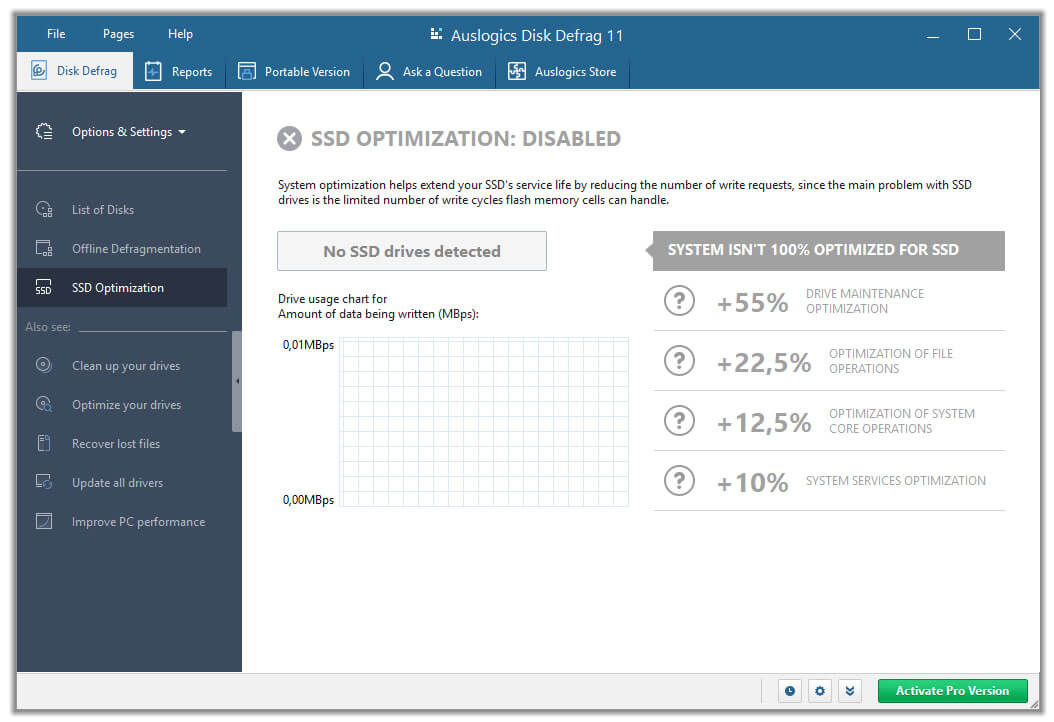
PCIe SSD Support. The PRO edition holds algorithms that are especially there for optimising (merely not defragmenting) SPI-based M.2 SSDs.
Cons
Bundleware. The program that sets up the entire process is also pretty sneaky in that it tries to install additional programs alongside (Auslogics Driver Updater and BoostSpeed 11). Simply put, it’s a major negative for the user.
Resource Hogging. The three programs, as a matter of default, may make themselves scheduled to be automatically launched at boot, hence, hibernation or startup will be heavy with them. On condition that defragmenting is seldom done, why should they be in the background?
Nag Screens. One may see small windows at the lower right part of the screen doing ad promotions for other stuff. In case of a utility tool—very unlike antivirus software—this is a very disturbing thing and the developers should definitely take the steps to solve it.
Upselling Interface. There are a lot of buttons that are not features but only links to other Auslogics products which you may download. It gives the feeling of less of being a dashboard and more that of a catalog.
Key Features
- Developer. Auslogics Software Pty Ltd.
- OS Support. Windows 10, 8.1, and 7.
- License. Freemium (Free with paid upgrades).
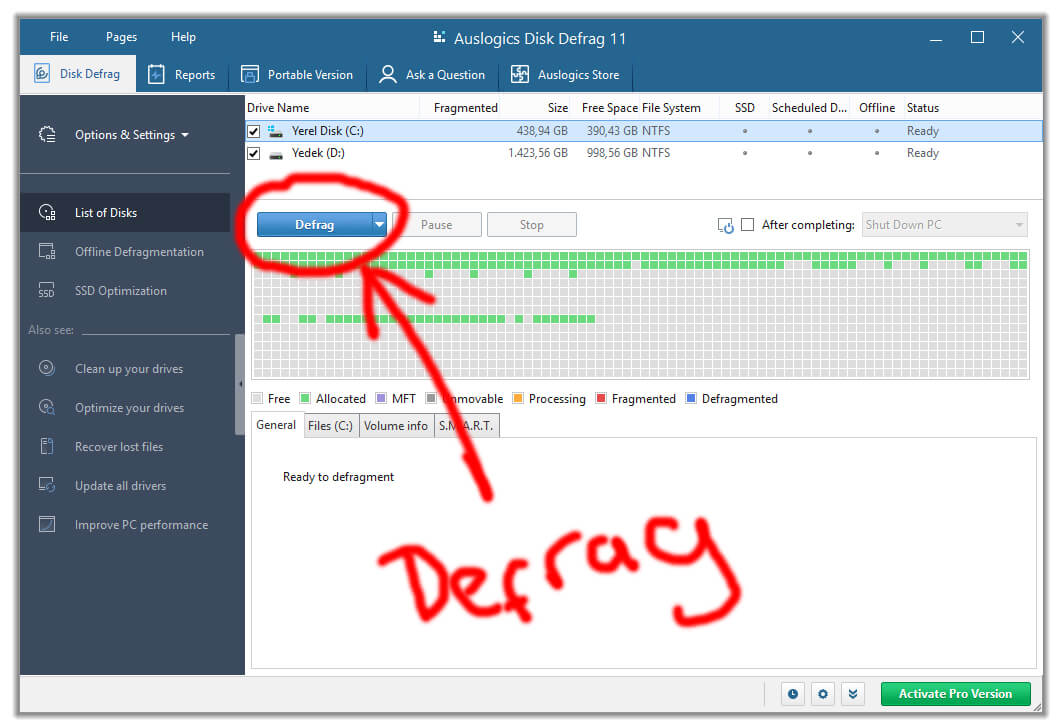
Interface & Usability. Auslogics is easy for a user to operate, although the whole menu is tight with buttons. The highly populated interface should not scare you away. The blue “Defrag” button is what you should really be looking for.
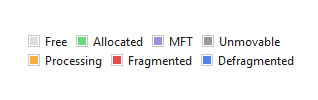
Once you do that, the software is working its wonders. It can be quite a lengthy operation if your drive is big and quite messy. The program employs a color-coded cluster map to give an account of the procedure.
- Red. Fragmented files.
- Green. Good, non-fragmented space.
- Blue. Currently processed sectors.
- Grey. Free space.
- Dark Grey. Master File Table (MFT) / System reserved.
- Purple. MFT data.
- Free vs. Pro. Are the features worth the money?
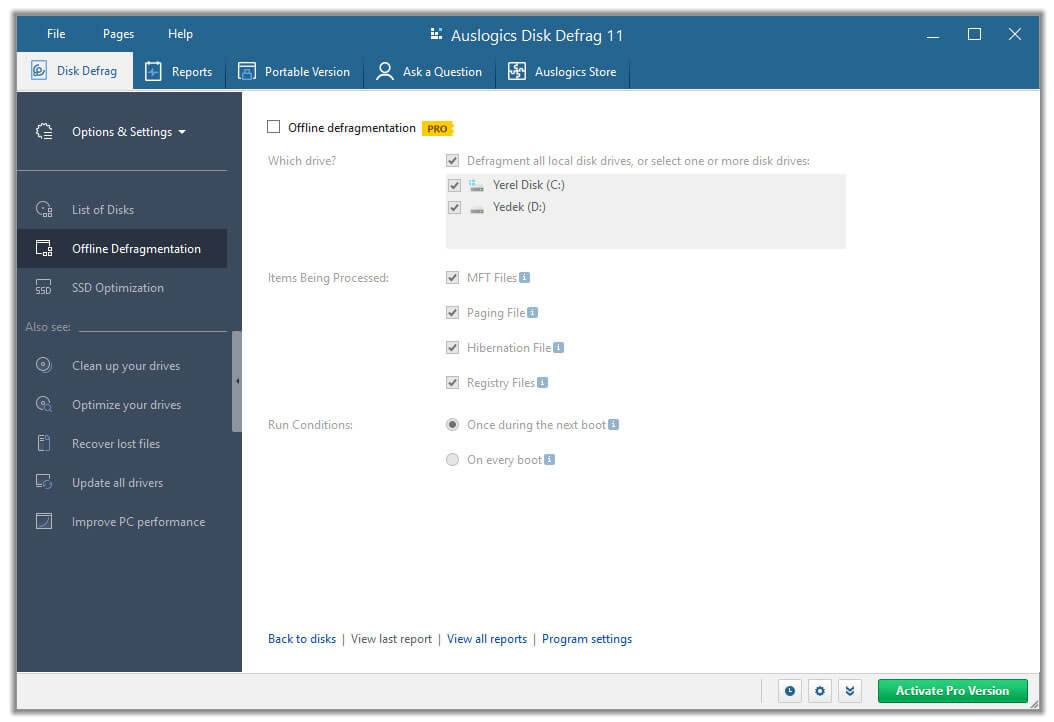
- “Smart” Defrag (Pro Only).
- Why you don’t need it.
- It tries to defrag on the fly. Windows provides background maintenance quite well, so this is almost unnecessary.
The Verdict.
The “limitations” of the free version are the features that the average user can do without because Windows already takes care of them.
Why Use a Third-Party Defragger at All?
If Windows does this automatically, why would you install Auslogics?
The “Deep Clean” Factor.
Windows is cautious. It frequently does not defragment system files, hidden files, or locked files in order to prevent any potential instability. Auslogics is more aggressive (but still safe). It can defragment files that Windows has left scattered. It guarantees a 100% contiguous file structure.
Recommendation.
Once in 6 to 12 months use Auslogics for a “Deep Clean”. Let Windows do the weekly maintenance. Continuous deep defragmentation is damaging your drive unnecessarily.
How to use it (quick guide)?
The program is similar to a semi-automatic car, you just need to put it into the right mode.
- Select Drive.
- Tick the checkbox of the drive that you want to repair.
- Analyze (Optional).
- Press “Analyze” if you want to see the level of fragmentation.
- Defrag.
- Press the “Defrag” button.
- Minor fragmentation.
- ~1 minute is required.
- Heavy fragmentation.
- It takes 15–25 minutes.
- Understanding the Extra Tabs.
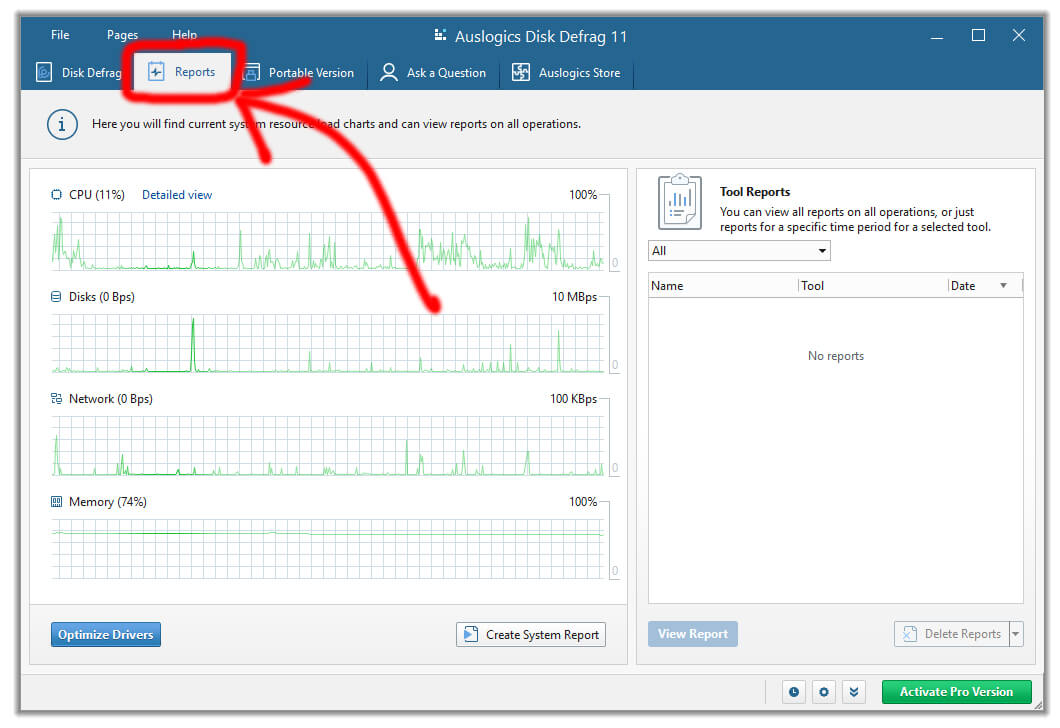
Reports.
Indicates CPU/Disk usage. The “Optimize Drivers” button is just a gimmick to entice you to their Driver Updater. So don’t bother clicking it.
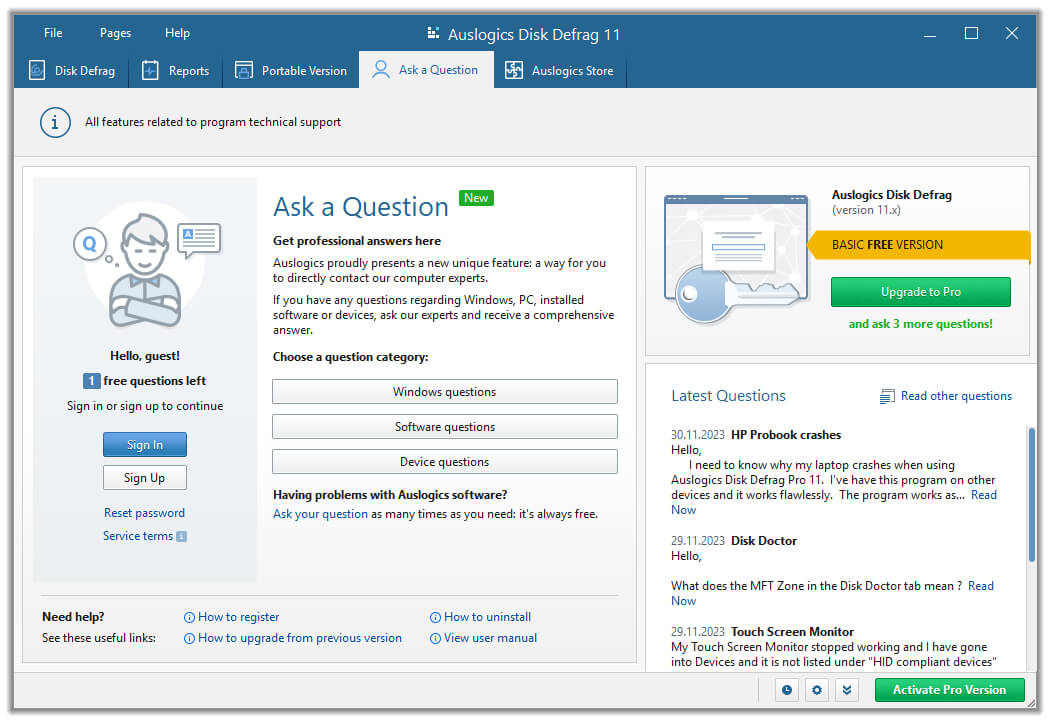
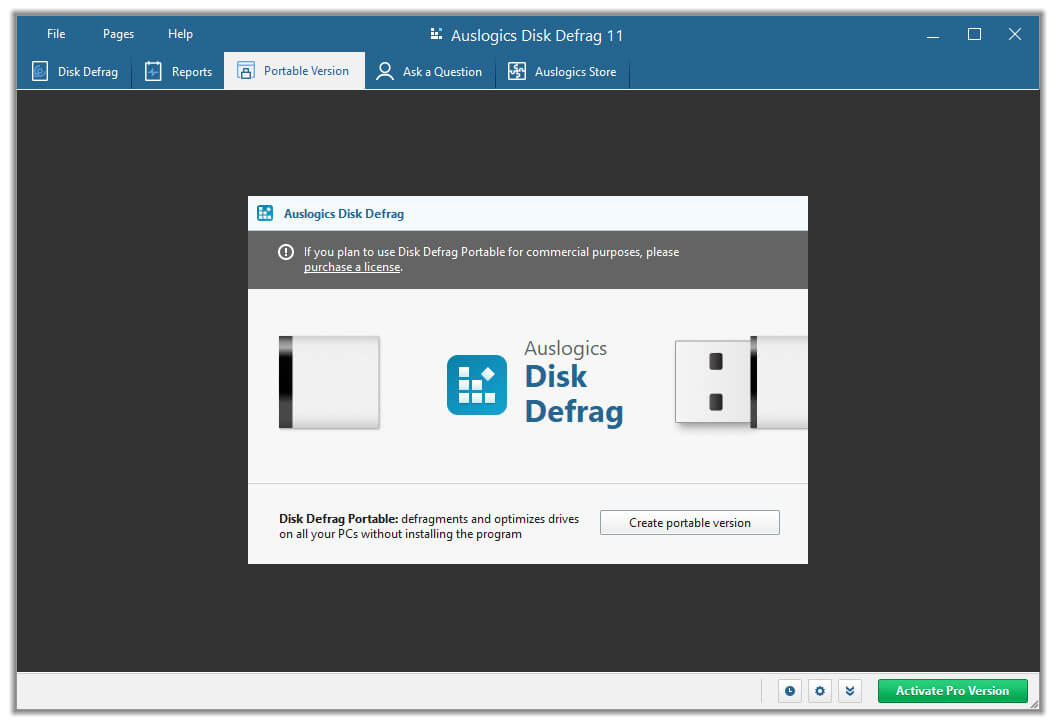
Portable Version.
You can put the app on a USB flash drive with this feature. Not very useful for home users, but IT professionals might find it handy.
How can I totally remove Auslogics Disk Defrag?
If you uninstall the app through Control Panel, it will only remove the program itself, but in most cases, the “digital crumbs” (registry keys and empty folders) are left behind.
- Head over to Start > Control Panel > Uninstall a Program location.
- Locate Auslogics Disk Defrag, right-click on it, and then click Uninstall.
Follow the prompts.Note.
This action removes most of the data (around 180MB), but there may be a few small config files left over. This is normal for most Windows programs.
What are the best Alternatives?
Auslogics is a top-tier app. However, here is the competitive landscape. Auslogics Disk Defrag (Our pick for speed and reliability).2. Defraggler (A product by the makers of CCleaner – reliable, but not that fast). 3. IObit Smart Defrag (Excellent game optimization, but too many ads). 4. O&O Defrag (Professional level, costly).
Is Smart Defrag any good?
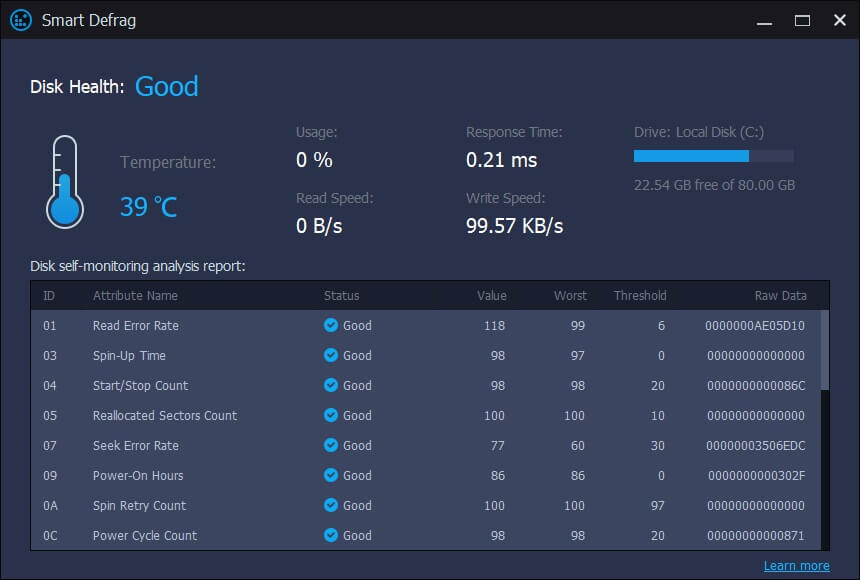
Yes, IObit’s Smart Defrag is a worthy challenger. It is a technically sound app, and it handles system files very well (about 92% efficiency achieved in our tests). Sticking to the Auslogics free version is fine. It is an effective tool for your yearly PC spring cleaning. Only be sure that you decline the other software that is offered when you are installing it!

Leave a Reply
You must be logged in to post a comment.